Backlink Checker: Complete Guide to Finding and Analyzing Your Website's Links
Learn how to use a backlink checker to analyze your website's links, find link-building opportunities, and improve your SEO rankings. Complete guide with best practices.
Backlink Checker: Complete Guide to Finding and Analyzing Your Website's Links
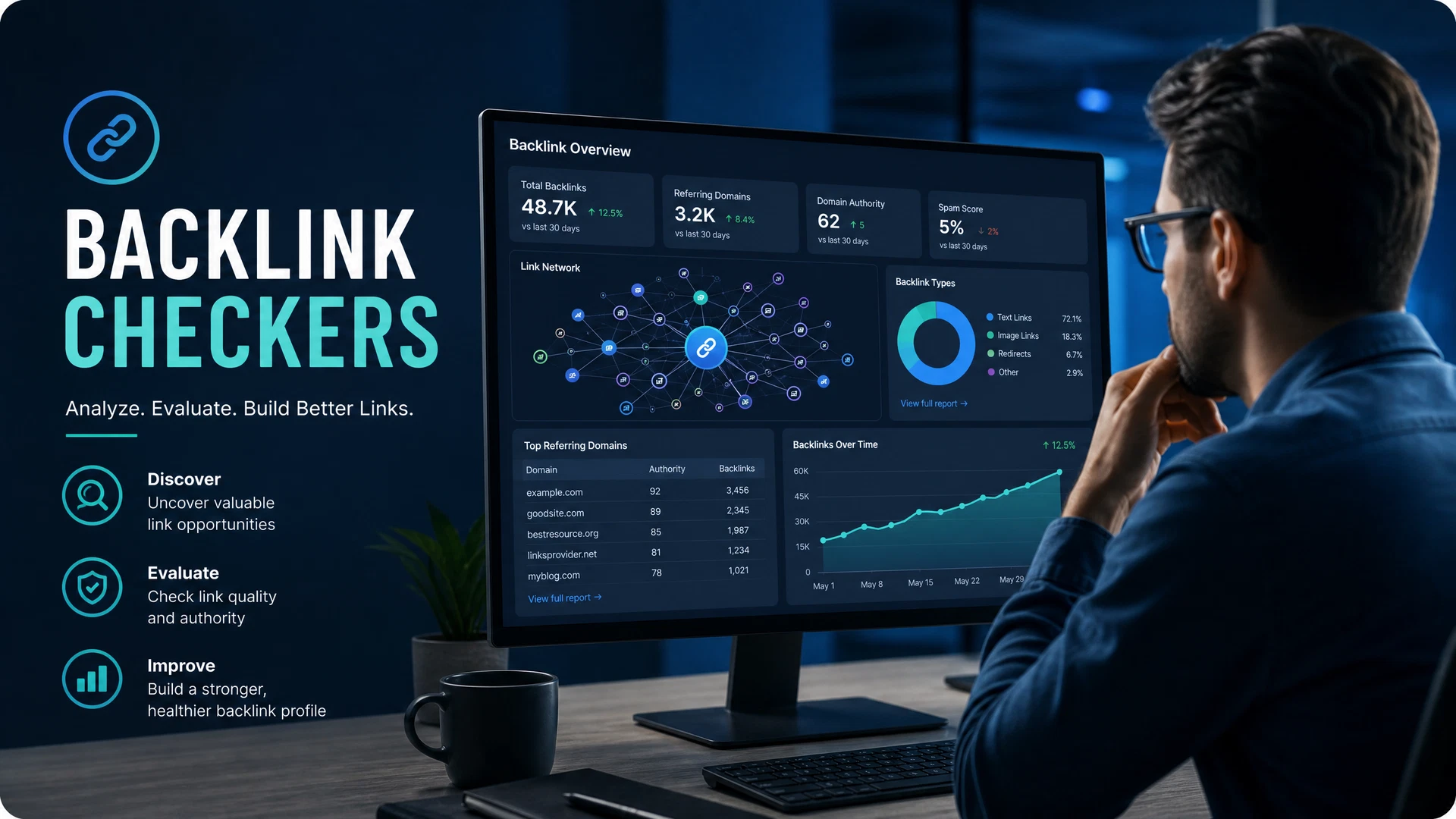
Backlinks are one of the most important ranking factors in Google's algorithm. A backlink checker is an essential SEO tool that helps you discover which websites are linking to yours, analyze the quality of those links, and identify opportunities to build more high-authority backlinks. Whether you're auditing your current link profile, monitoring competitor backlinks, or planning a link-building campaign, a backlink checker reveals the connections that drive your SEO success.
What Is a Backlink Checker?
A backlink checker is a software tool that scans the internet to find all external links pointing to your website. It shows you:
Link Sources — Which websites are linking to you
Link Quality — Authority and trustworthiness of linking domains (Domain Authority, Domain Rating)
Link Type — Follow vs. nofollow links, and their impact on SEO
Anchor Text — The clickable text used in links (important for keyword relevance)
Link Growth — New backlinks gained over time and lost links
Competitor Backlinks — Links pointing to your competitors' sites
Understanding your backlink profile is critical because backlinks act as "votes of confidence" from other websites. Google uses backlinks as a primary ranking signal — the more high-quality backlinks you have, the higher your site typically ranks.
Why Backlink Checkers Matter for SEO
1. Identify Link-Building Opportunities
By analyzing competitor backlinks, you can discover websites that might link to your content too. If a competitor in your industry has backlinks from a particular site, that site is likely interested in your topic and could be a target for outreach.
2. Monitor Your Link Profile
A backlink checker shows you exactly which sites link to yours. You can identify toxic or low-quality links that might hurt your rankings and disavow them using Google Search Console.
3. Audit Link Quality
Not all backlinks are equal. A link from a high-authority news site is worth far more than a link from a low-quality directory. Backlink checkers show domain authority metrics so you can focus on high-quality links.
4. Track Link Growth Over Time
Monitor how your backlink profile is growing. Are you gaining more links? Are they from better sources? A backlink checker shows trends and helps you measure the success of your link-building efforts.
5. Competitive Analysis
Analyze where your competitors are getting their backlinks. This reveals untapped opportunities and shows you which link-building strategies are working in your industry.
Key Metrics in a Backlink Checker
Domain Authority (DA) / Domain Rating (DR)
A score from 1-100 indicating the overall authority of a linking domain. Higher DA means the link is more valuable for your rankings.
Page Authority (PA) / URL Rating (UR)
Similar to DA, but for individual pages. A link from a high-authority page is more valuable than one from a low-authority page on the same domain.
Follow vs. Nofollow
Follow links pass authority to your site and directly impact rankings. Nofollow links don't pass authority but still drive traffic and brand awareness.
Anchor Text
The clickable text in a link. Anchor text that includes your target keyword is more valuable for ranking that keyword.
Link Type
Links can be editorial (earned naturally), guest post links, directory links, or other types. Editorial links from high-authority sites are most valuable.
Referring Domains
The total number of unique domains linking to you. More referring domains generally means better rankings, even if some domains have multiple links.
How to Use a Backlink Checker Effectively
Step 1: Audit Your Current Backlinks
Enter your domain into a backlink checker and review all links pointing to your site. Sort by domain authority to identify your most valuable links.
Step 2: Identify Toxic Links
Look for low-quality links from spammy sites, link farms, or irrelevant sources. These can hurt your rankings. Create a disavow file and submit it to Google Search Console.
Step 3: Analyze Competitor Backlinks
Enter a competitor's domain and see where they're getting links. Prioritize high-authority linking sites for your own outreach campaigns.
Step 4: Monitor New Links
Set up alerts or regularly check for new backlinks. This helps you track the success of your link-building efforts and catch any unexpected links early.
Step 5: Plan Your Link-Building Strategy
Use backlink data to identify the types of sites and content that attract links in your industry. Create similar content and reach out to relevant sites.
Best Practices for Backlink Building
1. Focus on Quality Over Quantity
One link from a high-authority site (DA 50+) is worth far more than 100 links from low-quality sites. Prioritize earning links from reputable sources in your industry.
2. Earn Editorial Links
The best backlinks are earned naturally when other sites find your content valuable and link to it without being asked. Create exceptional content that deserves to be linked to.
3. Diversify Your Anchor Text
Use a mix of branded, keyword-rich, and generic anchor text. Over-optimizing anchor text (using the same keyword repeatedly) can trigger Google's spam filters.
4. Get Links from Relevant Sites
A link from a site in your industry is more valuable than a link from an unrelated site. Google considers topical relevance when evaluating backlinks.
5. Avoid Black Hat Link-Building Tactics
Don't buy links, participate in link schemes, or use automated link-building tools. Google penalizes these tactics with manual actions or algorithmic penalties.
6. Monitor Your Backlink Profile Regularly
Use a backlink checker to monitor new links, lost links, and changes in your link profile. This helps you catch problems early and identify new opportunities.
Common Backlink Checker Mistakes to Avoid
1. Ignoring Nofollow Links
While nofollow links don't pass authority, they still drive traffic and brand awareness. Don't dismiss them entirely.
2. Obsessing Over Link Count
A few links from high-authority sites are better than hundreds from low-quality sites. Focus on quality metrics like domain authority.
3. Not Checking Competitor Backlinks
Your competitors' backlinks reveal link-building opportunities you might miss. Always analyze what's working for them.
4. Disavowing Too Aggressively
Be careful when disavowing links. Only disavow links from clearly spammy or irrelevant sites. Disavowing legitimate links can hurt your rankings.
5. Neglecting Anchor Text Analysis
Anchor text tells you which keywords your backlinks are optimized for. Use this data to understand your keyword ranking potential.
Backlink Checker Tools Comparison
Several backlink checkers are available, each with different features and pricing:
Ahrefs — Comprehensive backlink data, competitor analysis, and link-building tools. Premium pricing but industry-leading accuracy.
SEMrush — Full SEO suite with backlink checker, keyword research, and site audit. Good for all-in-one SEO management.
Moz — Domain Authority and backlink metrics, plus rank tracking and keyword research. Good for smaller businesses.
Ubersuggest — Affordable backlink checker with competitor analysis. Good entry-level tool for beginners.
RankXray — Free SEO audit tool that analyzes your site's links as part of a comprehensive audit. No signup required.
How RankXray Helps with Backlink Analysis
RankXray's free SEO audit tool analyzes your website across 6 categories, including a detailed Links category that evaluates your backlink profile. You get:
• Link Quality Assessment — Evaluation of your backlink profile quality
• Broken Link Detection — Identifies links that are no longer working
• Anchor Text Analysis — Shows which keywords your backlinks are optimized for
• Linking Domain Count — Total number of unique domains linking to you
• Actionable Recommendations — Step-by-step fixes to improve your link profile
All in a beautiful, easy-to-understand report with a letter grade (A-F) and specific recommendations you can implement immediately.
Analyze your backlink profile in 30 seconds.
Use RankXray's free backlink checker as part of your comprehensive SEO audit. Get a detailed analysis of your link profile, identify toxic links, and get actionable recommendations to improve your rankings — all free, no signup required.
Run Your Free RankXray SEO AuditConclusion
Backlinks are fundamental to SEO success, and a backlink checker is an essential tool for understanding and improving your link profile. By regularly auditing your backlinks, analyzing competitor links, and building high-quality links from relevant sources, you can significantly improve your search rankings and organic traffic.
The key is to focus on quality over quantity, earn links naturally through exceptional content, and monitor your backlink profile regularly. Start with RankXray's free SEO audit to analyze your current link profile, then use the insights to plan your link-building strategy.
Remember: Building a strong backlink profile takes time, but the investment pays off with higher rankings, more organic traffic, and increased authority in your industry.
Ready to improve your backlink profile?
Start with RankXray's free SEO audit. Analyze your links, identify opportunities, and get actionable recommendations — no signup required.
→ Run Your Free SEO Audit Now